
 ITALIANO
Health-care providers
Why should you consult a physiotherapist?
Persistent pain, sports injuries and postural problems are all issues for which physiotherapy offers targeted solutions to help patients regain mobility and feel more comfortable again. With more than 30 years of experience, Philippe Vial, President of the Monegasque Association of Private Physiotherapists, explains the key role that this discipline plays in physical recovery. MonacoSanté has all the information you need.
Physiotherapy for all ages
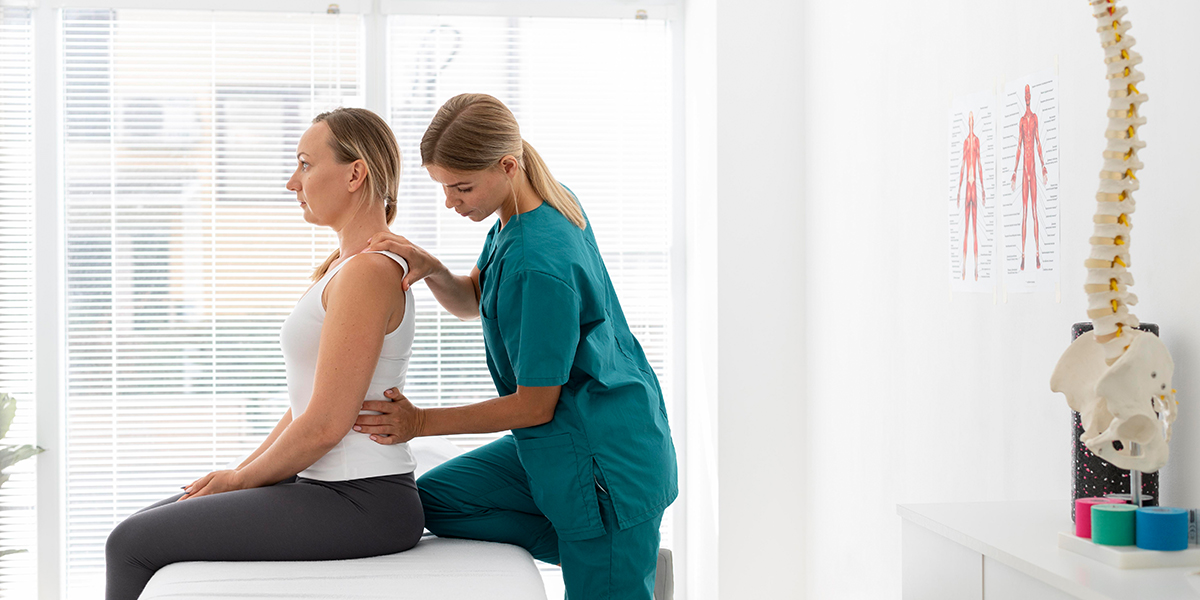
Physiotherapy can be summed up as treatment using movement. It is a relatively new discipline, emerging after the Second World War, with a new qualification in France replacing the previous medical massage. “Internationally, the term ‘physiotherapist’ is often used. Physiotherapy includes massage, external manipulations and all forms of mechanotherapy used in functional rehabilitation. It aims to restore a deficient function”, explains Philippe Vial, a physiotherapist who has been practising in Monaco for more than 30 years. From neurology to orthopaedic trauma, from urinary function disorders to paediatric respiratory physiotherapy, from osteoarticular disorders to problems with balance, not to mention treatment for sports injuries and helping people to stay mobile in their homes, the areas covered by physiotherapy are vast. “We can support patients from age 0 to 100 years. For example, we treat – from birth, at the maternity hospital – children with congenital deformities of the feet,” explains Philippe Vial. In the majority of cases, patients are referred by their doctor following an accident, illness or the emergence of a functional disorder. This is because physiotherapy is only carried out on the basis of a medical prescription. The first consultation allows an assessment to be carried out and suitable techniques to be identified. “We analyse the condition, and if it doesn’t fall within our area of expertise, or if the intervention is premature, we refer the patient elsewhere. Some conditions can be resolved in five sessions, others require several years of treatment.” On average, sessions last for around 30 minutes, with the exception of specific cases such as respiratory physiotherapy, where sessions are generally shorter.
Physiotherapy and osteopathy: different practices
To support patients, physiotherapists can specialise in a particular condition and they have a wide range of tools at their disposal: ultrasound, radio frequency to heat tissue, electrotherapy to treat pain and electrical stimulation to strengthen muscles. Not to mention, of course, all of the massage techniques in which they are skilled. “Our area of expertise also includes sports physiotherapy in the broad sense, not just for high-level athletes. We can treat an injured athlete and monitor them from start to finish to get them back on track, using exercises to strengthen their muscles so that they can resume training. We have some very sophisticated equipment that enables us to carry out assessments and review progress. That’s why the term ‘physiotherapy’ is becoming a little simplistic. The field has undergone enormous change over the past 70 years.” It should not be confused with osteopathy. “Osteopathy takes the individual as a whole as its starting point for reestablishing equilibrium, before eventually focusing on a specific area. Physiotherapy takes the opposite approach: it starts with a small area – a knee, an ankle, a hip, a shoulder – and then broadens out if required. Our goal remains to restore the mobility of a joint or a function. The two disciplines do not use the same manipulations or tools: osteopathy is entirely manual while physiotherapy also makes use of equipment,” explains Philippe Vial. The Centre Paramédical de Fontvieille, which Vial founded in 1995, employs six physiotherapists and two osteopaths on a full-time basis. “In my view, these two professions absolutely complement one another. The main thing is to help the individual gain relief from their discomfort, pain or postural problems,” he emphasises.
Maintaining independence in old age
Physiotherapy includes numerous specialisms, but there is one that is gaining in importance today: support for the elderly. “One of our main functions is to help people live independently at home. An elderly person who is left alone will move less, go out less, get less exercise. Gradually, they slide into a type of lethargy and will lose all of their independence, even if they did not start off with any particular problems,” says Philippe Vial. Regular exercise and movement are therefore vital in preventing loss of independence. There are 45 private physiotherapists who are licensed to practise in Monaco, including six who offer services exclusively in the home, as close as possible to patients’ needs. “For the elderly, it is not specifically pain that is going to prevent them from going out or taking a walk. It really is the lack of stimulation. It is no longer acceptable to allow elderly people to slip into a complete loss of independence.” Demand is growing, and geriatricians are increasingly referring their patients to physiotherapy to enable them to maintain a level of independence. “Very often, we are asked to see an elderly man or woman living alone and not moving around very much”, explains Philippe Vial.
A new Monegasque Society of Physiotherapists?
Referral to physiotherapy thus appears to be increasingly included within care pathways. However, there are some circumstances in which it should not be seen as the first avenue of recourse. “In the case of acute injuries, such as fractures or serious sprains, it is vital that an examination is carried out beforehand,” warns the health professional.
“If we are not careful, we can cause damage. The starting point is to establish a diagnosis.” The Monegasque Association of Private Physiotherapists has been promoting this philosophy since it was founded in 1987. Thirty-five of the Principality’s 45 private physiotherapists are members of the Association, and Philippe Vial has served as its President since 2012: “We act as a point of contact between practitioners, governing bodies and social services.” In recent months, the Association has been working to make changes to its statutes in order to create a Monegasque Society of Physiotherapists in the Principality.
“The aim is for us to become a legal entity that truly manages the profession. Today, any private physiotherapist with a licence to practise can set up in Monaco without being affiliated with the Association. In addition, those working at the hospital or at the Cardiothoracic Centre are excluded from membership because they are employees.”
Discussions with the Prince’s Government are underway, and the Government has welcomed the proposal. “This would allow the profession to organise itself and have more control over the physiotherapists practising within the country, to prevent potential abuses. By establishing a stronger framework, we would be able to act as the first port of call in the event of a dispute or problem,” continues the President. Currently, just a quarter of the physiotherapists in Monaco are Monegasque nationals. A society could provide better information to young Monegasques and encourage them to train in the profession. “It is a demanding profession – the study required, the cost of property in Monaco, the collective agreements with the social security funds – but it is nonetheless a highly useful and exciting profession. I will never regret my decision, and I would do exactly the same thing all over again. As I approach the end of my career, I can say with hindsight that I could not have done anything else.”