
 ITALIANO
Actualités
Mosquitoes: the Principality anticipates health risks
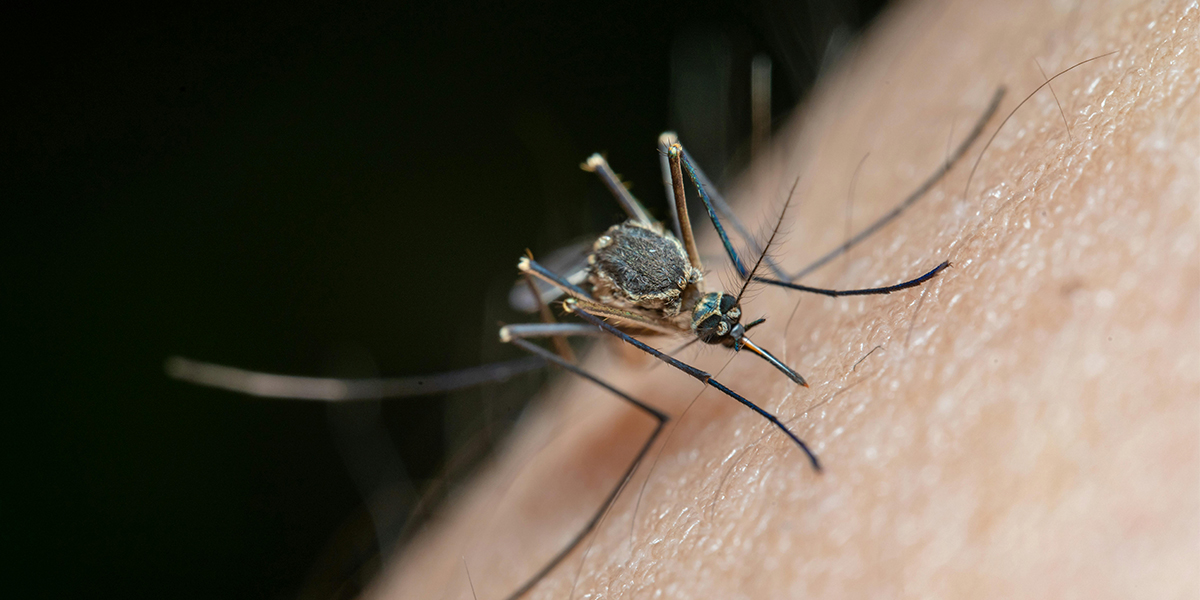
Far more than a simple source of discomfort, mosquitoes are vectors of viruses and parasites. To ensure a healthy environment, the Principality deploys an active surveillance network across its entire territory each year. MonacoSanté keeps you informed.
Identifying the threat to prevent better
Originating from South-East Asia and first spotted in 2004 in Menton, the Asian tiger mosquito (Aedes albopictus) has since colonised numerous territories. "Initially limited to tropical zones, its presence has unfortunately become common from Marseille to Liguria. And Monaco is no exception", observes Dr Thomas Althaus, Medical Inspector of Public Health at the Department of Health Affairs. The problem? Heat waves that favour the development of larvae, extending the insect's presence throughout much of the year. "Larval cycles are multiplied and shortened, leading to exponential growth in the mosquito population", confirms the doctor. Previously considered merely a nuisance (noise and itching), these mosquitoes are now capable of transmitting serious diseases. This is why, since 2024, a government programme, led by the Ministry of Health and Social Affairs and the Department of Health Affairs, has mobilised the Department of Urban Amenities, the Société des Bains de Mer, Monaco City Hall and the Monaco Scientific Centre (CSM). Objective: to anticipate epidemic risks. "We have traps equipped with chemical attractants for adult mosquitoes distributed across the entire territory. They are analysed by the CSM to detect the possible presence of arboviruses such as dengue, chikungunya, Zika or West Nile", explains Dr Althaus. "To supplement this system, we also deploy CO2 traps to capture as many mosquitoes as possible". Finally, to intensify the fight, larvicide is dispersed in all stagnant water sources in the Principality. "From May to November, there are daily visits to all at-risk breeding site zones", specifies Thomas Althaus.
80% of breeding sites are found in private homes
Although no virus has yet been identified in Monaco, vigilance remains essential. "We have captured thousands of mosquitoes since 2024 and none have tested positive. This confirms the absence of autonomous or community virus circulation in the Principality. I should add that no arbovirus viral load has been detected in Monegasque wastewater", certifies Dr Althaus. Nevertheless, a chikungunya outbreak affected around one hundred people in Antibes last summer. An unprecedented episode that must be taken very seriously. "Experts fear that this type of event may no longer be an exception. We must change our approach", warns the doctor. In the absence of curative treatment and widespread vaccines, prevention remains, according to him, the best weapon. And the fight is primarily waged at home: 80% of breeding sites are indeed found in private homes. Dr Althaus emphasises the essential need for a change in citizen behaviour: "Beyond trapping, we conduct free audits including an inventory of mosquito breeding and resting sites to formulate targeted recommendations". The recommended solutions range from eliminating stagnant water (emptying saucers, covering swimming pools, clearing gutters) to active trapping via CO2-dispensing devices that mimic human breathing and attract females. Building managers are now being made aware to adapt these control strategies to the configuration of each residence, safely. In parallel, essential protective measures are being promoted: use of insect repellents, wearing loose-fitting clothing, installing mosquito screens on windows or using a fan in bedrooms.
Anticipating epidemic risk on return from travel
"The mosquito is not the virus reservoir, but its vector", emphasises Dr Olivia Keïta-Perse, head of the Travellers' Medicine - Infectious Diseases service at Princess Grace Hospital (CHPG). Arbovirus transmission operates according to two distinct mechanisms. On the one hand, through vertical transmission, which remains very rare: an infected female directly transmits the virus to her larvae, which are thus born carrying the virus. On the other hand, horizontal transmission, the main mode of contamination, which relies on a blood exchange cycle. "During its blood meal, the mosquito draws the virus from an infected person in the viral circulation phase. Once infected, the insect transmits the virus to a healthy person during its subsequent bites", explains the specialist. This is why a sick person must absolutely avoid being bitten, so as to break the transmission chain and prevent contaminating the local mosquito population. "It is a public health issue because the vector is present and active. It only waits to transmit", stresses Dr Keïta-Perse. In Monaco, primary care medicine and CHPG emergency services have implemented common identification procedures. The feared scenario is the introduction of the virus by an "index patient", the term given to a traveller returning from a tropical zone. "Because if this patient is bitten by a local mosquito while the virus is circulating in their blood, the insect becomes a vector and can transmit the disease to people who have never travelled, thus creating clustered cases". For this reason, if a patient is hospitalised for arbovirosis, isolation measures are applied to prevent mosquitoes from biting them.
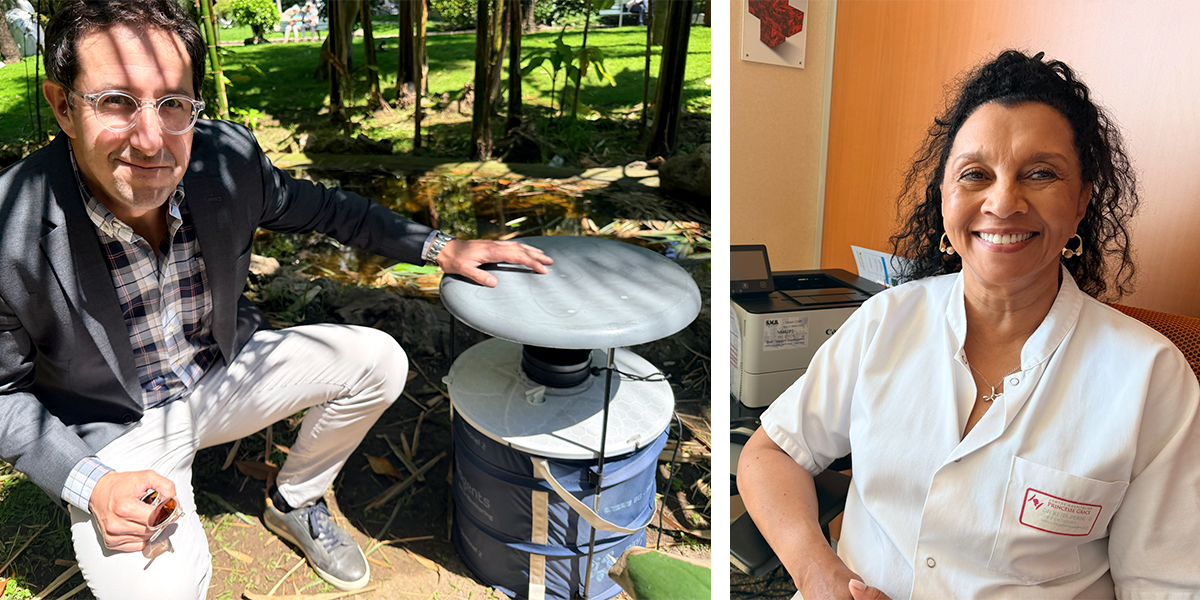 Dr Thomas Althaus / Dr Keïta-Perse
A dedicated consultation for travellers' health
In Monaco, the two doctors consulted are reassuring: the risk of mortality linked to a mosquito bite remains extremely low. However, vigilance is necessary in the face of certain conditions that can cause serious symptoms, notably chikungunya. "The infection manifests itself with severe joint pain. In certain cases, the disease can become chronic and progress to severe rheumatism forms, such as rheumatoid arthritis", indicates Dr Olivia Keïta-Perse. The most serious forms concern malaria (which is not transmitted by the same mosquito and therefore cannot currently be indigenous) and haemorrhagic dengue an absolute medical emergency. Prevention and advice for travellers are therefore an integral part of the infectiologist's duties. The CHPG thus offers a "Travellers' Consultation" twice a week and holds a World Health Organization (WHO) accreditation for yellow fever vaccination. "On return from a tropical zone, the appearance of any symptom such as fever, headache or unusual infectious signs must absolutely lead to a medical consultation, specifying the stay abroad", advises the specialist. She tirelessly reiterates the protective rules: systematic use of impregnated mosquito nets, application of appropriate repellents and wearing of covering clothing in neutral tones, as bright colours visually attract insects. Between rigorous scientific surveillance and citizen vigilance, Monaco's system is today one of the densest in the region. By anticipating risks today, Monaco does not merely manage a nuisance; it seeks to protect its health future sustainably. Its overall effectiveness depends on each person: emptying a simple saucer of stagnant water on a balcony is sometimes as crucial as installing a CO2 trap.