

 ITALIANO
Health topics
The benefits of sophrology
Stress, tiredness, sleep disturbances, lack of confidence… Sophrology offers breathing and relaxation exercises accessible to everyone, helping to restore a better inner balance. This gentle practice supports emotional regulation and promotes a greater sense of calm in daily life. MonacoSanté keeps you informed.
A recent discipline of relaxation
“A mind–body method that aims to soothe mind, relax the body and better manage emotions”. This is how Éliane Bruno, a certified sophrologist for the past five years, describes the discipline which she practises in both individual and group sessions. Sophrology emerged in the 1960s under the impetus of the Colombian neuropsychiatrist Alfonso Caycedo. Since then, it has attracted millions of practitioners worldwide. According to the “Institut national de la santé et de la recherche médicale” (French National Institute of Health and Medical Research - Inserm), the sophrology is based on relaxation techniques combined with breathing exercises and guided positive visualisation. As Éliane Bruno confirms: “These are exercises involving conscious breathing, positive visualisation and muscle contractions, designed to soothe stress or certain types of pain”. The ultimate goal is to “better harmonise the body and mind”. The reasons for practising sophrology are numerous: stress management, improving sleep, support in coping with chronic pain, preparation for childbirth, support during perimenopause and menopause, helping athletes enhance their performance, and strengthening self-confidence. The only major contraindication is schizophrenia, “which can lead to psychological decompensation”.
A complement to medicine, not a substitute
“Sophrology does not replace medical care under any circumstances”, stresses Éliane Bruno. “I see it as a complementary approach”. It is indeed essential to remember that a sophrologist is not a therapist. Their training allows them to intervene in a preventive or supportive, approach, but never a curative one. In the event of illness, this practice is neither a substitute for a medical diagnosis or medication. “Even though its scopes of application are very broad, the method does not substitute any medical treatment. Moreover, a sophrologist will never be able to carry out a diagnosis or issue prescription” reminds the trade union chamber for the profession in France. In a context marked by rising levels of stress, anxiety disorders and sleep disturbances, sophrology stands out as a complementary preventative tool. This gentle practice can help individuals become active participants in their own physical and mental balance. Depending on individual needs, this can help people cope better with treatments, mobilise their inner resources, or manage the side effects of a care pathway. "It allows them to reconnect with themselves and value their own abilities", adds Éliane Bruno. The aim of sophrologists is to guide individuals towards greater self-awareness and a fairer balanced approach to mental, emotional, and physical well-being. "We support people in understanding their emotions better, not in making them disappear".
A protocol of four to six sessions on average
Each program begins with an initial session that can last up to 1.5 hours. The protocol is always tailored following the anamnesis, a preliminary discussion during which the person expresses their experiences, needs, and goals. “Each session is designed individually, based on what the person shares with me. There is no fixed protocol as each program is unique. I take the time to ask several questions in order to understand the person's motivations and needs. This is an essential step in developing a protocol tailored to a specific goal ", explains the sophrologist. On average, four to six sessions are recommended, each lasting between 45 minutes and one hour. “The aim is to empower people so they can reproduce the exercises into their daily lives. Incorporating sophrology into your routine allows you to manage your days more effectively". Éliane Bruno has worked a wide range of individuals of all ages, both in individual and group sessions. “Sophrology is accessible from the age of 5 or 6, as soon as the child becomes aware of their body. With younger children, the sessions are shorter, around 30 minutes, and more fun, in order to hold their attention”, she adds.
Abdominal Breathing as the Cornerstone
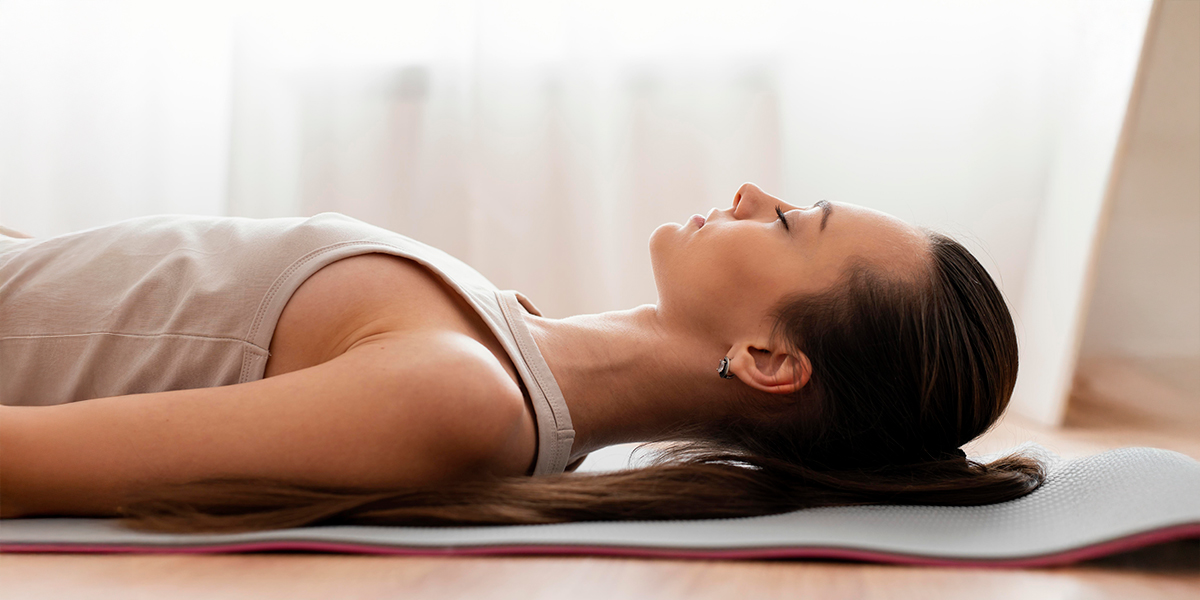
Sessions are generally structured in two parts. The first part, often carried out standing up, is devoted to dynamic breathing exercises. For example, abdominal breathing, which involves inhaling through the nose while expanding the abdomen, then exhaling slowly through the mouth as if blowing through a straw. “This exercise allows you to reconnect with yourself". She also uses the "shoulder pumping" exercise: inhaling deeply through the nose, while expanding the abdomen, holding the breath for a few moments and performing rhythmic shoulder movements, then exhaling through the mouth to release physical and mental tension The second part of the session is dedicated to positive visualisation, either seated or lying down. "I invite the person to project themselves in a place that gives them sense of safety and wellbeing". This state of relaxation occurs at the heart of the session, when the person is deeply relaxed yet fully aware. These soothing images to promote a rapid sense of wellbeing and can be reused in situations that generate stress or anxiety. “At the end of a session, people often feel a certain tiredness. This is the sophroliminal phase, corresponding to a deep letting go or a form of disconnection. It is generally accompanied by a feeling of lightness, calm, and heightened awareness. However, experiences can vary greatly from one person to another: physical sensations, images, emotions, or sometimes simply a sense of calm. There is no right or wrong experience, everyone lives it in their own way”, concludes Éliane Bruno. By fostering autonomy, self-awareness, and emotional management, sophrology thus contributes to improving the overall quality of life and well-being of individuals.